Home / Services
ServicesMailing isn't compliance. Everything after it is.
Mailing the annual notice is only the first step. Our services cover everything after it: tenant tracking, follow-up, DOH notification, inspections, violation clearance and audit response. Not sure what you need? Start with a Readiness Review, then choose: build your own system with our guidance, or hand the whole cycle to us.
Annual Notice & Follow‑Up Services
Mailing is step one. We handle every step after it, document it while it happens and keep the proof for 10 years.
Annual notice records are the first thing a Record Production Order asks for, and the mailing is the smallest part of them. When tenants don't respond, and in many buildings most don't, the law requires follow-up: identifying every non-responding unit by February 15, attempting to determine between February 16 and March 1 whether a child under six lives there, notifying the Health Department in writing where you still can't confirm, and inspecting every child-occupied unit. That follow-up is where most annual notice files fall short, and it's what we specialize in.
Requirements per HPD, Annual Notice and Investigations and HPD, Indoor Allergen Hazards.
Ask yourselfFor the units that didn't return a notice last year, what record shows you followed up, and did you notify DOH?

What's included
- Annual notice distributionLead paint and window guard notices delivered to every unit January 1–16, with proof of delivery
- Tenant trackingEvery returned notice logged by building, unit and year, and every non-responding unit identified by February 15
- Investigation notices and follow-upNotices to non-responding tenants and documented attempts between February 16 and March 1 to determine whether a child under six resides
- DOH notificationWritten notification to the Health Department for units still unconfirmed, with your copy on file
- Required inspectionsAnnual visual investigations in child-occupied units and common areas, results to the tenant, and annual Local Law 55 mold and pest inspections
- Ten-year proofEvery notice, response, attempt, notification and report stored by building, unit and year, and ready for HPD
RPO Readiness Review
You certify lead paint compliance under Local Laws 1, 31 and 111 on every HPD registration. We test your file against what a Record Production audit will ask for, before HPD asks.
A Record Production Order asks for up to ten years of lead-based paint records within 45 days. We go through your files category by category and year by year, then tell you plainly what an audit would find today, what can still be fixed and how.
Ask yourselfIf HPD asked tomorrow, how would your team pull together 10 years of annual notice records?

What's included
- Ten-year records inventoryAnnual notices, investigations, XRF testing, turnovers, violation work and non-violation work
- Document-by-document gap analysisEach gap tied to the requirement behind it and why HPD asks for it
- Written readiness reportBuilding-by-building findings in plain language
- Prioritized action planWhat to fix first, what can be corrected now and what should be documented going forward
- Review meetingWe walk your team through the findings and answer every question
RPO Audit Response Assistance
Already received a Record Production Order? Your response organized and assembled against the 45-day clock.
HPD gives owners 45 days to produce records. Not responding, or responding with incomplete records, can result in immediately hazardous Class C violations. We take inventory of what you have, identify what's missing, and help you assemble an organized response with the affidavits the order requires.
Owners with open 618, 619 or 620 violations may be able to use HPD's Record Production Order Dismissal Request process. We'll explain whether it applies to you. Requirements per HPD.
Ask yourselfWhat does your team still need to find before day 45?

What's included
- Order review and deadline planWe read the order with you and map every requirement to the 45-day timeline
- Records collection and assessmentWe gather records from your staff, vendors and files and check them against the order
- Gap identificationWe show where the response is incomplete and which options remain
- Response assemblyAn organized submission package with the required affidavits prepared for signature
- Follow-throughSupport with follow-up questions and next steps after submission
Compliance Strategies
A system your own team can run, built by people who handle audits every day.
For owners and managers who want to run compliance in-house, we design the system around your buildings, your staff and your workflow. Your team learns what each law requires and why, so the system keeps working long after we've built it.
Ask yourselfWhat would need to be true for your team to feel ready without outside help?
What's included
- Compliance calendarEvery annual, turnover and inspection deadline mapped for your portfolio
- Written proceduresStep-by-step processes for notices, follow-up, turnovers and contractor work
- Templates and logsForms and logs your team can use to record what was done
- Record retention structureHow to file and keep ten years of documents so they can be produced on request
- Staff trainingSessions for managers and superintendents on the what and the why
Lead & Mold Inspection Services
Inspections by our team, filed where an audit will look for them.
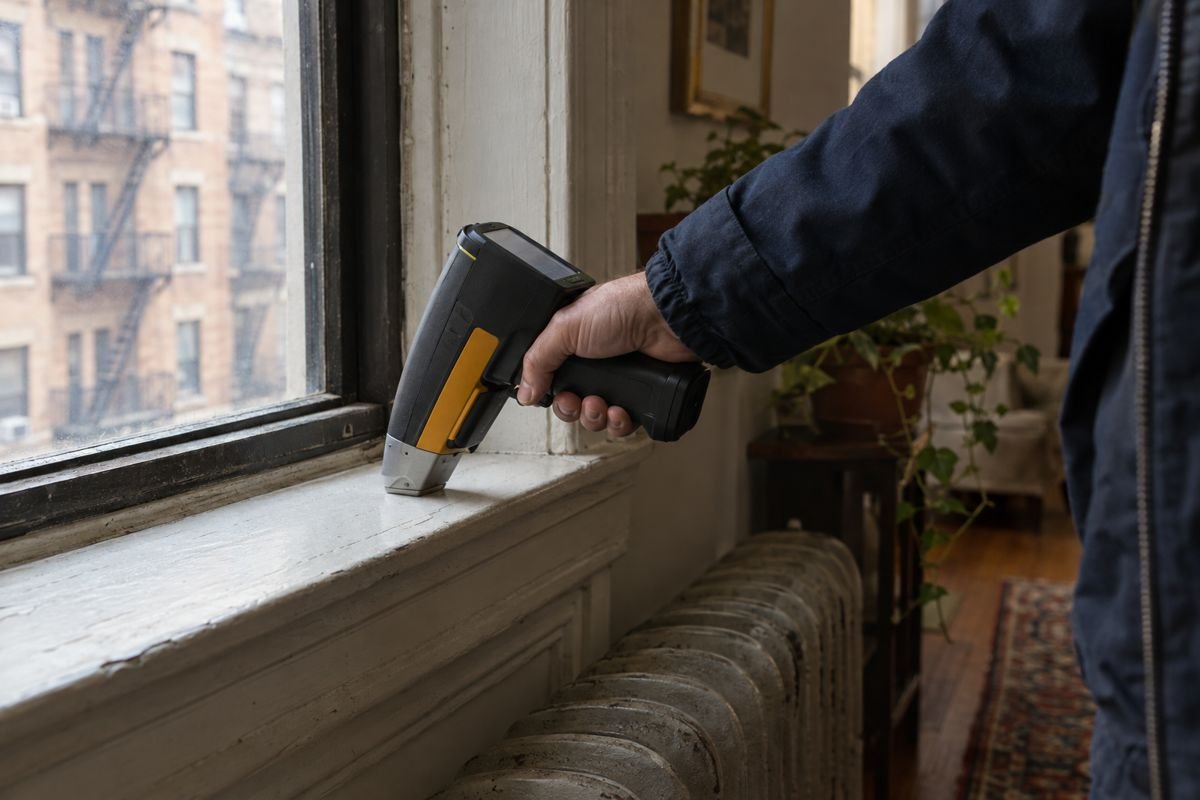
Testing is only half the requirement. The other half is keeping the result with the inspector's credentials for ten years. Our inspections are documented and stored automatically in our software, organized by building and unit.
Ask yourselfWhere is the XRF report for your building today, and does it include the inspector's certification?
What's included
- XRF lead paint testingFor Local Law 1 and Local Law 31 testing requirements
- Dust wipe samplingTurnover compliance and lead abatement clearance
- Paint chip samplingSupporting HPD violation contestation
- Mold assessmentInitial assessment for HPD mold violations and post-remediation clearance
- Automatic record filingEvery report stored with the inspector's credentials
Abatement & Remediation Oversight
An independent set of eyes making sure the work, and the paperwork, are done right.
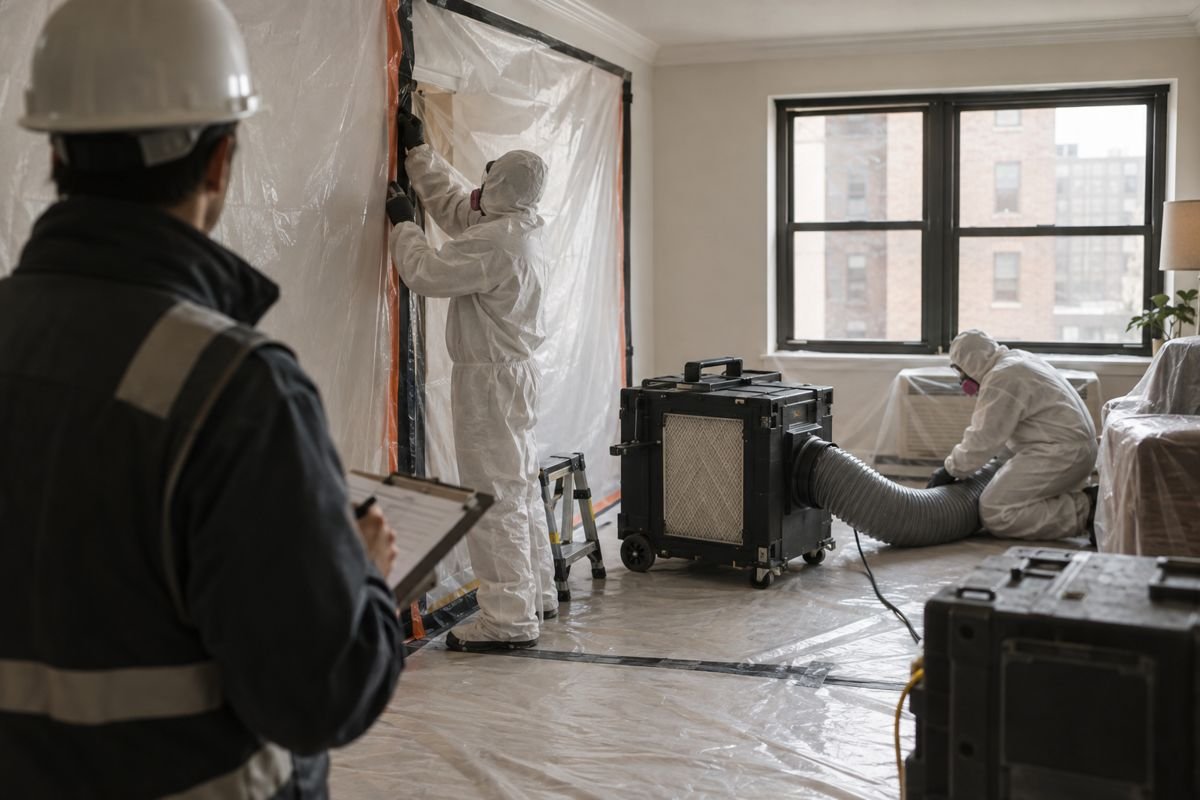
When lead abatement or mold remediation is performed, HPD can later ask how the work was done and who did it. We oversee the contractor on your behalf, confirming containment, safe work practices and paperwork are in place, so your property and your records are protected.
Ask yourselfIf HPD asked how your last abatement job was done, what would you hand them?
What's included
- Pre-work reviewScope, contractor certifications and licensing checked before work begins
- On-site supervisionContainment, protection of occupants and property, and safe work practices verified
- Documentation collectionCertifications, affidavits, and work and filing records collected from the contractor
- Clearance coordinationDust clearance or post-remediation assessment arranged after completion
- Complete work fileEvery document filed with the building's records
Lead & Mold Violation Clearance
From open violation to complete filing, off your desk. Lead and mold violations stay on your record until HPD gets the documentation it requires.
Fixing the condition is only part of clearing the violation. For lead-based paint and mold orders, HPD inspects the correction and also requires proof that the work was done according to law. For lead, that means a sworn statement and EPA certification from the firm that did the work, dust clearance results from a New York State-certified lab, and the dust sampler's affidavit and training certificate, all with a notarized owner certification. For mold violations in buildings with 10 or more units, HPD also needs affidavits and New York State licenses from the mold assessor and remediator. Lead, mold and pest violations can't be certified through eCertification, so each one is filed on paper, and a single missing document can hold up the filing.
Requirements per HPD: lead-based paint violations, mold and clearing violations. HPD decides whether each violation is closed. We prepare and file complete documentation, but we can't guarantee HPD's decision.
Ask yourselfHow many of your open lead and mold violations were fixed months ago and are still on the record?
What's included
- Violation analysisWe pull your open HPD violations and identify every lead paint and mold order, building by building and unit by unit
- Inspections and testingOur team performs the lead and mold inspections, dust wipe clearance and post-remediation assessments the filing depends on
- Correction work managedAbatement or remediation quotes for you to choose from, with the contractor's work supervised and documented
- Certification packageCertification of Correction forms, affidavits, contractor certifications, licenses and lab results assembled and checked, with notarization arranged
- Filing and follow-upFiled with HPD the required way, tracked, and followed through HPD's re-inspection, including Dismissal Requests for violations past their certification date
- Records retainedEvery clearance document filed with the building's records, ready if HPD asks for it in a Record Production audit
Three steps. No guesswork.
No pitch on the first call. We listen first, then tell you plainly what we see.
- 01 / Call
A 15-minute conversation
We ask about your buildings, your records and what prompted the call. You do most of the talking.
- 02 / Review
We look at the documents
Building by building, year by year, against what a Record Production Order asks for.
- 03 / Plan
A written plan you choose
Every gap, why it matters and how to close it. Run it with your own team, or hand it to us.
Not sure where to start? Start with the Readiness Review.
We'll tell you where you stand and which services, if any, you actually need. If the answer is none, we'll say so.
No-obligation call. We'll tell you plainly where you stand.